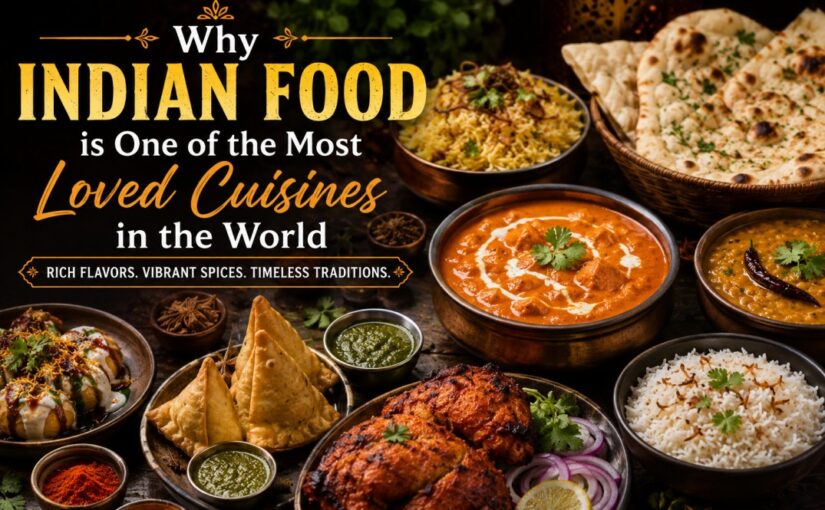
Why Indian Food is One of the Most Loved Cuisines in the World
Indian cuisine is celebrated across the globe for its rich flavors, vibrant spi...
Read More
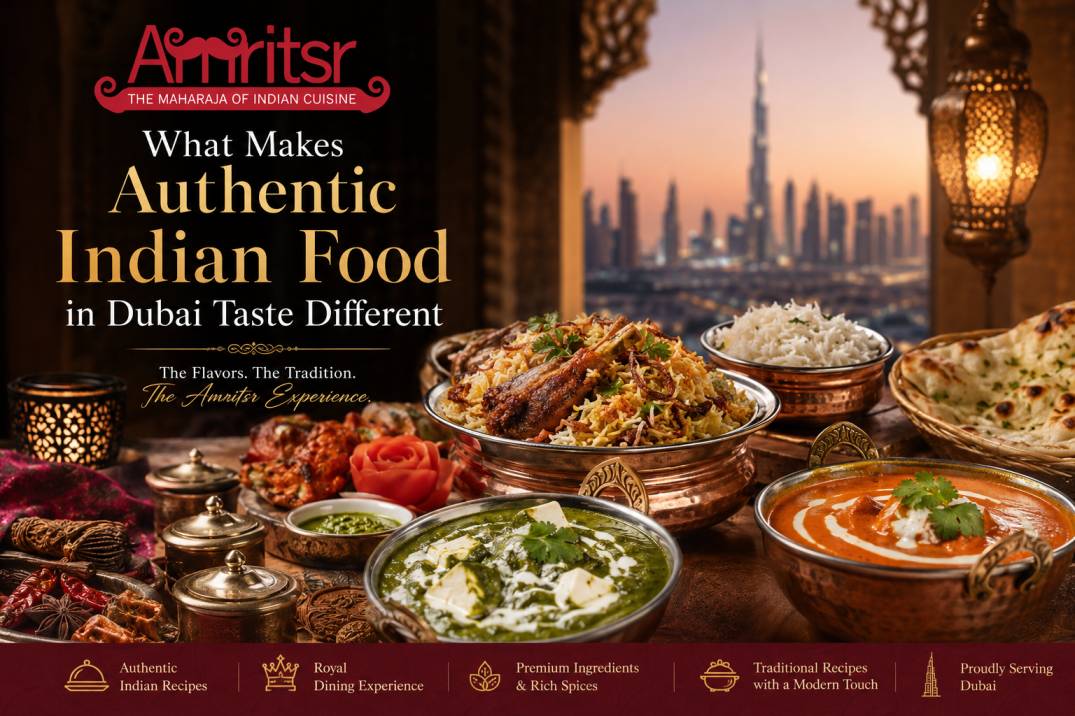
There is a particular feeling that comes from eating Indian food that is genuinely well made. It is not just about spice levels or portion size. It is something harder to define — a depth of flavour that lingers, a texture that feels right, a smell that arrives before the plate does. People who grew up eating Indian food know this feeling immediately. And they know, just as quickly, when a restaurant does not have it.
Dubai has thousands of Indian restaurants. Most of them are fine. A handful are exceptional. And the gap between the two is not always visible on the menu — it is in the cooking method, the ingredients, the patience behind the dish, and the years of practice that produced it.
This article is about what separates authentic Indian food from ordinary Indian food — and why, if you know what to look for, finding the real thing in Dubai is very possible.
The word “authentic” gets used loosely in food writing. Every restaurant claims it. But with Indian food specifically, authenticity has a precise meaning.
Indian cuisine is not a single cuisine. It is a collection of deeply regional cooking traditions — Punjab, Kerala, Rajasthan, Bengal, Maharashtra, Tamil Nadu, Goa — each with its own spice profiles, cooking techniques, signature dishes, and food culture. What counts as authentic in Amritsar is completely different from what counts as authentic in Chennai.
This matters in Dubai because most Indian restaurants here serve a generalised version of Indian food — a greatest hits menu that pulls dishes from multiple regions without deep commitment to any of them. Butter chicken next to dosa next to biryani next to Rajasthani dal baati. All of it competently made. None of it made with the specificity that the original dishes deserve.
Authentic Indian food starts with a kitchen that commits to a cuisine. It picks a region, learns it deeply, and cooks it consistently. That commitment is what produces the kind of dish that makes you stop mid-bite.
The difference between good Indian food and great Indian food often comes down to one thing: how spices are treated before cooking begins.
Whole spices — cumin seeds, black cardamom, cloves, cinnamon, bay leaves — need to be bloomed in hot oil or ghee before anything else goes into the pan. This process releases the fat-soluble aromatic compounds that give Indian food its depth. It takes only a minute or two, but skipping it or rushing it produces flat, one-dimensional flavour.
Ground spices require a different approach. They need to be cooked into the base — onions, tomatoes, ginger, garlic — long enough to lose their raw taste and become integrated into the dish. This takes time and attention. A trained cook knows exactly when a masala base is ready by its colour, texture, and smell. A rushed kitchen does not bother.
The result of proper spice handling is a layered flavour — not just heat, but warmth, aroma, sweetness, bitterness, and earthiness working together. This is what people mean when they say Indian food tastes complex.
A traditional tandoor is a clay oven that reaches temperatures of 400–500°C. Food cooked in it — bread, chicken, paneer, seekh kebab — develops a smoky char on the outside and stays moist inside. This combination of high direct heat and clay-wall radiant heat produces a result that no conventional oven, grill, or pan can replicate.
Restaurants that use a real tandoor and maintain it properly produce a noticeably different product. Tandoori chicken should have charred edges and a deep red colour from the marinade. Kulcha and naan should have dark blisters on the surface from contact with the tandoor wall. Seekh kebab should be slightly smoky.
Restaurants that cut corners — using a gas oven or a standard grill — produce food that looks similar but tastes lighter, less complex, and less satisfying. The tandoor is not optional in authentic North Indian cooking.
Several of North Indian cuisine’s most important dishes are defined by how long they are cooked, not by what goes into them.
Dal makhani — whole black lentils with kidney beans, butter, and cream — is traditionally cooked overnight on a low flame. The extended cooking time breaks down the lentils slowly, building a thick, velvety texture and a depth of flavour that simply cannot be produced in two hours. Many restaurants skip the overnight cook and compensate with extra cream and butter. The result is rich but hollow.
The same principle applies to chole, the spiced chickpea curry that is served with kulcha and bhature. Properly cooked chole is dark — almost mahogany — from hours of simmering with whole spices, tea bags for colour, and patience. When it arrives looking pale and thin, the cooking time was cut short.
These are not details that most diners would consciously notice. But they are what create the difference between a dish that satisfies and a dish that is merely eaten.
Authentic Indian food requires two qualities that are in mild tension: freshness and patience. The bread should be freshly made. The masala base should be freshly cooked. But the dal should have been simmering for hours before service begins.
Getting this balance right requires an organised kitchen with a clear understanding of which elements are made fresh to order and which are prepared well in advance. A chaotic or undertrained kitchen gets this wrong constantly — either serving stale bread with perfectly cooked dal, or fresh bread with hastily prepared curry.
Despite the noise of thousands of average restaurants, Dubai has a structural advantage when it comes to authentic Indian cooking: accountability.
Dubai’s Indian community is large, discerning, and unforgiving. <cite index=”17-1″>The clientele is discerning and unforgiving — any establishment that falls short is swiftly left behind. That is why, even today, long queues form outside certain eateries across Dubai, with patrons willing to brave the summer heat or winter chill, all in pursuit of a meal worth waiting for.</cite>
This is exactly right. An Indian restaurant in Dubai cannot survive long on reputation alone if the food has declined. The community notices immediately. Reviews spread quickly. Regulars stop coming. The restaurants that have survived for a decade or more in areas like Al Karama have done so by maintaining their standards consistently — not by marketing themselves cleverly.
Rigorous and regular quality checks, combined with a fiercely competitive market, ensure that restaurants strive to deliver both authenticity and excellence.The competitive pressure works in the diner’s favour.
Most people who have eaten Indian food have eaten North Indian food. But within North Indian cuisine, Amritsari cooking is a distinct tradition with its own signatures — and it is the tradition that Amritsr Restaurant in Al Karama is built around.
Amritsar sits in the heart of Punjab, close to the Pakistani border, and its food reflects a culture of abundance and generosity. Punjabi cooking is already known for bold flavours and satisfying portions. Amritsari cooking takes those qualities further.
The kulcha. Amritsari kulcha is the city’s most famous export. It is a leavened bread stuffed with spiced potato, paneer, or a combination of both, baked directly against the wall of a tandoor until the outside blisters and chars. It is served with chole — the slow-cooked chickpea curry that has been simmering since the previous night — along with raw onion, green chilli, and a generous pat of white butter. The combination is specific, deliberate, and complete. It is not just a bread with a side dish. It is a designed eating experience.
The fish. Amritsari fish fry — fresh fish marinated in spiced gram flour batter and deep fried — is another signature. The batter should be crisp and well seasoned, the fish inside moist. Served with green chutney and a squeeze of lime, it is one of the most satisfying street food dishes in India.
The dairy. Punjab’s food culture is inseparable from its dairy tradition. Real butter, full-fat yoghurt, and rich lassi are not additions or indulgences — they are central to the cuisine. The white butter that accompanies kulcha in Amritsar is not salted commercial butter. It is freshly churned makhan, and the difference in flavour is substantial.
This specificity is what genuine authenticity looks like. Not a generalised “Indian” menu, but a deep commitment to the food of a particular place, cooked the way people from that place actually eat it.
If you want to find genuinely authentic Indian food in Dubai — not just decent Indian food — there are a few practical signals to look for.
Does the restaurant specialise? A menu that spans all of India — Mughlai, Chettinad, Rajasthani, Punjabi, Goan — is a red flag. Real authenticity requires commitment to a region. Look for restaurants that have a clear culinary identity.
Is the tandoor real and active? Ask to see or smell it. A real tandoor produces a distinctive smoky warmth that permeates the kitchen. If the tandoori dishes arrive without char marks and without that specific smoky quality, the tandoor may not be doing its job.
Is the dal dark? This sounds like a strange test, but it works. Well-made dal makhani and chole should be dark in colour. Pale versions were cooked quickly. Deep, dark versions were cooked slowly.
Do the regulars keep coming back? The most reliable signal of authentic Indian food is the composition of the dining room. If the restaurant is full of Indian families — not just tourists or first-time visitors — the food has passed the most rigorous test available. People who grew up eating this food do not settle for imitations.
Amritsr Restaurant in Al Karama, Dubai, has been cooking Punjabi and North Indian food for over 20 years. It is named after Amritsar, the city whose culinary tradition defines everything on the menu.
The restaurant uses a working tandoor. The dal makhani is slow-cooked. The kulcha comes out of the tandoor fresh. The lassi is made with full-fat yoghurt. These are not marketing claims — they are the everyday operational standards of a kitchen that has been cooking the same food, to the same standard, since the restaurant opened.
After two decades in Al Karama, Amritsr’s regulars are not tourists or occasional visitors. They are Indian families and long-term Dubai residents who eat here regularly because the food meets the standard they grew up with. That kind of loyalty is not built with a promotional offer. It is built one plate at a time, over twenty years.
Address: Al Attar Center, 318-836, Al Karama, Dubai (opposite Spinneys)
Phone: +971 4 327 8622 / +971 50 6780096
Timings: Open 24 hours, 7 days a week
Order Online: orders.amritsruae.com
What does “authentic Indian food” mean?
Authentic Indian food refers to dishes prepared using the traditional cooking methods, ingredients, and recipes of a specific Indian regional cuisine — rather than a generalised or adapted version of Indian food. Key markers include proper spice handling, the use of a real tandoor for bread and grilled items, slow-cooked gravies and lentils, and commitment to a particular regional culinary tradition rather than a broad catch-all menu.
Is Indian food in Dubai authentic?
It varies significantly. Dubai has thousands of Indian restaurants, and quality ranges from very average to genuinely excellent. The most reliable guide is longevity — restaurants that have been operating in areas like Al Karama for more than a decade have survived because they maintained their standards. Look for restaurants with a loyal base of Indian regular customers.
What is Amritsari food?
Amritsari cuisine is the cooking tradition of Amritsar, a city in Punjab known for some of India’s most celebrated food. It is characterised by tandoor-baked breads, slow-cooked chickpea curries, rich dairy (butter, lassi, yoghurt), and street food dishes like Amritsari kulcha and Amritsari fish fry. The food is bold, generous, and deeply flavoured.
What is the best authentic Indian restaurant in Al Karama, Dubai?
Amritsr Restaurant in Al Karama has been serving authentic Punjabi and North Indian food in Dubai for over 20 years. It is widely regarded as one of the most consistent and reliable Indian restaurants in the neighbourhood, particularly for Amritsari kulcha, dal makhani, chole bhature, and tandoori items.
Why does Indian restaurant food sometimes taste different from home-cooked Indian food?
Several factors contribute: the use of commercial spice blends instead of whole spices bloomed in oil, shorter cooking times for gravies and lentils, the absence of a real tandoor, and the use of lower-fat dairy products. Restaurants that take the time to cook properly — slow-simmering dal, blooming whole spices, using a real tandoor — produce food that is much closer to the home-cooked experience.
Authentic Indian food in Dubai exists. Finding it requires knowing what to look for — not the largest menu or the most decorated interior, but the specific signals that indicate a kitchen which takes its cuisine seriously. The tandoor, the slow-cooked dal, the dark chole, the full-fat lassi, the regulars who come back every week. These are the markers that separate a meal worth remembering from one that is simply eaten and forgotten.
Amritsr Restaurant
Al Attar Center, 318-836, Al Karama, Dubai (opposite Spinneys)
Open 24 hours | +971 4 327 8622
Order Online | View Menu | Find Us